
If you’ve ever been too tired to brush your teeth before bed, you’ve probably wondered: Does it really matter? Or could you just brush extra well in the morning? This age-old debate about optimal brushing times has a surprising answer that could change your oral health routine forever.
At Alpine Family Dental in Kalispell, MT, Dr. Evan Olson frequently addresses this question with patients. While the ideal answer is brushing twice daily, understanding why timing matters can help you prioritize your oral health more effectively. In this post, we’ll explore the science behind morning and evening brushing to determine which session truly matters most for protecting your smile. Have questions about your oral care routine? Call our Kalispell dentist at (406) 393-8877 to schedule a consultation.
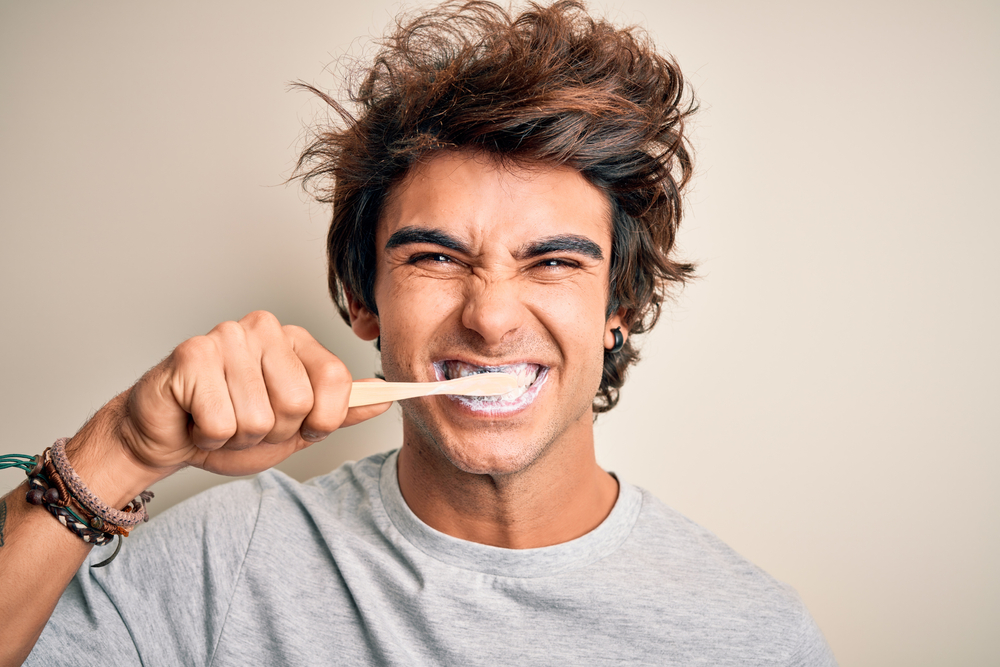
The Case for Morning Brushing
Why We Need Morning Brushing
Let’s start with the obvious: morning breath. That unpleasant taste and odor when you wake up isn’t just uncomfortable—it’s a sign of bacterial activity that occurred overnight. Morning brushing serves several crucial purposes beyond social confidence.
When you brush in the morning, you’re eliminating the biofilm and bacterial buildup that accumulated while you slept. This gives you a fresh start for the day and removes the bacteria that cause bad breath.
What Happens in Your Mouth Overnight
Your mouth undergoes significant changes during sleep. Saliva production dramatically decreases, creating a drier environment where bacteria can multiply more rapidly. Any food particles remaining from the previous day become a feast for these bacteria, which produce acids as a byproduct of their metabolism.
This is why your mouth feels fuzzy and tastes unpleasant when you wake up—it’s the result of millions of bacteria thriving in your mouth’s overnight conditions.
Additional Morning Benefits
Morning brushing provides fresh fluoride protection before you consume breakfast, helping to strengthen your enamel against the acidic foods and beverages you might consume throughout the day. It also removes debris that could interact with your morning coffee or orange juice, potentially causing additional acid attacks on your teeth.
Beyond the health benefits, there’s the social and professional advantage of fresh breath. Whether you’re heading to an important meeting or simply chatting with coworkers, morning brushing ensures you can interact confidently throughout the day.
The Case for Evening Brushing
Why Evening Brushing Is Critical
Now let’s examine the evening session. Throughout the day, your mouth accumulates food particles, sugars, and bacteria from everything you eat and drink. Evening brushing removes this daily buildup before you enter the extended period of sleep.
This timing is crucial because you’re preventing bacteria from feeding on food particles and sugars for the entire night. Without this cleaning, you’re essentially giving bacteria a 7-8 hour buffet to feast on whatever remains in your mouth.
The Science Behind Nighttime Cavity Risk
Here’s where the science becomes compelling: cavity formation accelerates at night. During sleep, your saliva flow decreases by as much as 90%, removing one of your mouth’s primary defense mechanisms. Saliva naturally neutralizes acids, washes away food particles, and contains minerals that help repair early tooth decay.
When you skip nighttime brushing, bacteria have 7-8 hours of uninterrupted time to produce acids that attack your tooth enamel. Without adequate saliva to neutralize these acids, the damage compounds throughout the night. This extended exposure time is why nighttime presents the greatest risk period for cavity development.
Long-term Impact of Skipping Night Brushing
Consistently skipping evening brushing leads to accelerated plaque buildup, which hardens into tartar within 24-72 hours. This tartar can only be removed by a dental professional and creates rough surfaces where more bacteria can colonize.
Over time, this pattern significantly increases your risk of gingivitis, gum disease, and cavity formation. Dr. Olson often sees patients at Alpine Family Dental who maintain decent morning routines but struggle with nighttime brushing—and the difference in their oral health outcomes is noticeable.
The Verdict: Which Matters More?
Evening Brushing Wins by a Narrow Margin
If we had to choose just one session as “more important,” evening brushing wins—but only by a narrow margin. The extended overnight period, combined with reduced saliva production, creates the perfect storm for bacterial activity and cavity formation. The 7-8 hours of sleep represent the longest uninterrupted period during which bacteria can work against your teeth.
Research consistently supports the importance of nighttime oral hygiene. Studies have shown that people who brush before bed have significantly lower rates of cavities and gum disease compared to those who only brush in the morning.
But Don’t Skip Morning Brushing
However, this doesn’t mean morning brushing is unimportant. Each brushing session serves different but complementary purposes in your oral health routine. Morning brushing addresses the overnight bacterial buildup, freshens breath, and provides a protective fluoride coating for the day ahead.
The real takeaway is that consistency matters more than perfection. While evening brushing may have a slight edge for cavity prevention, maintaining both sessions ensures comprehensive protection for your teeth and gums.
Best Practices for Both Sessions
Optimal Morning Routine
There’s a debate about whether to brush before or after breakfast. Brushing before breakfast provides immediate protection and removes overnight bacteria, but brushing after breakfast removes food particles from your meal. Dr. Olson recommends brushing before breakfast, then rinsing with water after eating. If you prefer brushing after breakfast, wait 30-60 minutes after consuming acidic foods or drinks to avoid brushing softened enamel.
Regardless of timing, spend at least two minutes brushing, covering all surfaces of your teeth with gentle, circular motions.
Optimal Evening Routine
Evening brushing should ideally occur right before bed, not immediately after dinner. This ensures you’ve removed everything from your day before the long overnight period begins. This is also the optimal time for flossing, as removing food particles between teeth is crucial before the extended sleep period.
Use fluoride toothpaste during your evening session—this fluoride will remain on your teeth throughout the night, providing extended protection and helping remineralize any areas of early decay.
General Brushing Tips
Whether morning or evening, follow these best practices:
- Brush for a full two minutes, spending about 30 seconds on each quadrant of your mouth
- Use a soft-bristled brush to avoid damaging enamel and gum tissue
- Apply gentle pressure—brushing harder doesn’t clean better and can actually damage your teeth
- Replace your toothbrush every three to four months, or sooner if bristles become frayed
- Angle your brush at 45 degrees toward the gum line to effectively clean where teeth meet gums
What If You Can Only Brush Once?
Choose Evening If You Must Pick One
Life happens. Perhaps you’re camping, traveling without supplies, or dealing with an emergency. If circumstances force you to brush only once a day, make it the evening session.
The reasoning is simple: the overnight period presents the greatest risk for cavity development due to decreased saliva flow and extended bacterial exposure time. By brushing before bed, you’re removing the day’s accumulation and minimizing the damage that can occur during sleep.
Making the Most of a Single Session
If you’re limited to one brushing session, make it count:
- Spend extra time on technique, ensuring you reach all surfaces
- Don’t skip flossing—removing interdental debris is crucial
- Consider using an antibacterial mouthwash for additional protection
- Make it a priority to return to twice-daily brushing as soon as possible
Beyond Brushing Timing: Other Factors That Matter
Technique Trumps Timing
Here’s an important truth: proper brushing technique matters more than perfect timing. Brushing twice daily with poor technique is less effective than brushing once with excellent technique. However, the ideal scenario combines proper technique with consistent twice-daily brushing.
Common mistakes to avoid include brushing too hard, rushing through the process, missing the back molars, and neglecting the tongue (which harbors bacteria that contribute to bad breath).
Electric toothbrushes can be helpful, especially for people who struggle with proper manual brushing technique. Many electric brushes have built-in timers and pressure sensors to guide better brushing habits.
Don’t Forget Flossing
Brushing alone can’t reach 35% of your tooth surfaces that lie between teeth. Flossing is essential, and evening is the most important time to floss. Removing food particles from between teeth before the overnight period prevents bacteria from accessing these trapped nutrients during sleep.
Diet and Lifestyle Factors
Your brushing routine is just one piece of the oral health puzzle. Limiting sugar and acidic foods reduces the fuel available for bacteria. Staying hydrated throughout the day supports healthy saliva production, which naturally protects your teeth. Most importantly, regular dental checkups allow professionals like Dr. Olson to catch problems early and provide personalized guidance for your specific needs.
Common Myths and Misconceptions
Myth: Brushing Harder Cleans Better
Many people believe that applying more pressure creates cleaner teeth. In reality, aggressive brushing damages enamel and can cause gum recession. Gentle, circular motions with a soft-bristled brush are most effective for removing plaque without harming your teeth.
Myth: You Can Skip Brushing If You Use Mouthwash
Mouthwash is a helpful supplement to your oral hygiene routine, but it cannot replace the mechanical action of brushing. Mouthwash can reduce bacteria and freshen breath, but only brushing physically removes the biofilm and plaque that accumulate on teeth.
Myth: Morning Brushing Before Breakfast Is Wasteful
Some people argue that brushing before breakfast is pointless since you’ll just get your teeth dirty again. However, removing overnight bacteria and applying fluoride protection before exposing your teeth to food and beverages provides important benefits. This is a personal preference situation, though both approaches have merit.
So which matters more—morning or evening brushing? Evening brushing has a slight edge for preventing cavities due to the extended overnight period when bacteria thrive in a low-saliva environment. However, both morning and evening brushing are essential components of a comprehensive oral health routine.
The real key to maintaining healthy teeth and gums isn’t choosing between morning and evening—it’s committing to consistency and proper technique in both sessions. Your smile is worth four minutes a day.
Making Smart Brushing Choices
If you’re concerned about your oral health routine or have questions about the best practices for your specific situation, Dr. Evan Olson and the team at Alpine Family Dental are here to help. Call our dentist’s office in Kalispell, MT at (406) 393-8877 today to schedule an appointment and ensure your brushing routine is protecting your smile effectively.