The Shift Toward Digital Dentistry
Dental care has changed significantly over the past decade. What once relied heavily on physical impressions, external lab work, and longer wait times is now increasingly driven by digital precision and in-office technology. One of the most important advancements in this shift is 3D printing in dentistry.
At Alpine Family Dental in Montana, 3D printing plays a growing role in delivering accurate, efficient, and comfortable care. This technology helps streamline treatment while improving outcomes for patients who need restorations, orthodontic appliances, and other dental solutions.
If you’re ready to experience a more modern, precise approach to dental care, call Alpine Family Dental today at (406) 752-1107 to learn how advanced technology like 3D printing can support your smile.
What Is 3D Printing in Dentistry?
3D printing in dentistry is a process that creates highly precise dental objects layer by layer using digital design files. Instead of relying solely on traditional molds or external fabrication labs, dental teams can design and produce restorations and appliances using computer-guided systems.
The process starts with a digital scan of the mouth. This replaces traditional impression materials that many patients find uncomfortable. From there, a 3D model is created and used to design the required dental item.
Common materials used in dental 3D printing include:
- Biocompatible resins
- Dental-grade polymers
- Ceramic-based materials (for certain applications)
These materials are chosen for durability, safety, and long-term performance in the mouth.
How the 3D Printing Process Works at a Dental Office
Understanding how 3D printing works helps patients see how much more efficient modern dentistry has become.
Step 1: Digital Scanning
Instead of traditional putty impressions, a small handheld scanner captures detailed images of the teeth and gums.
Step 2: Digital Model Creation
The scan is converted into a 3D digital model that represents the patient’s mouth with extreme accuracy.
Step 3: Design Phase (CAD Software)
Dentists design crowns, bridges, aligners, or other restorations using specialized software that allows for precise adjustments.
Step 4: 3D Printing
Once the design is finalized, a 3D printer fabricates the object layer by layer using dental-grade materials.
Step 5: Fitting and Placement
The final product is tested for fit, adjusted if needed, and placed or delivered to the patient.
This streamlined workflow reduces delays and improves consistency across treatments.
What Alpine Family Dental Uses 3D Printing For
3D printing is a versatile tool that supports many different areas of dental care. At Alpine Family Dental, it is used in several key ways:
- Custom Crowns and Bridges: Designed for precise fit and natural appearance
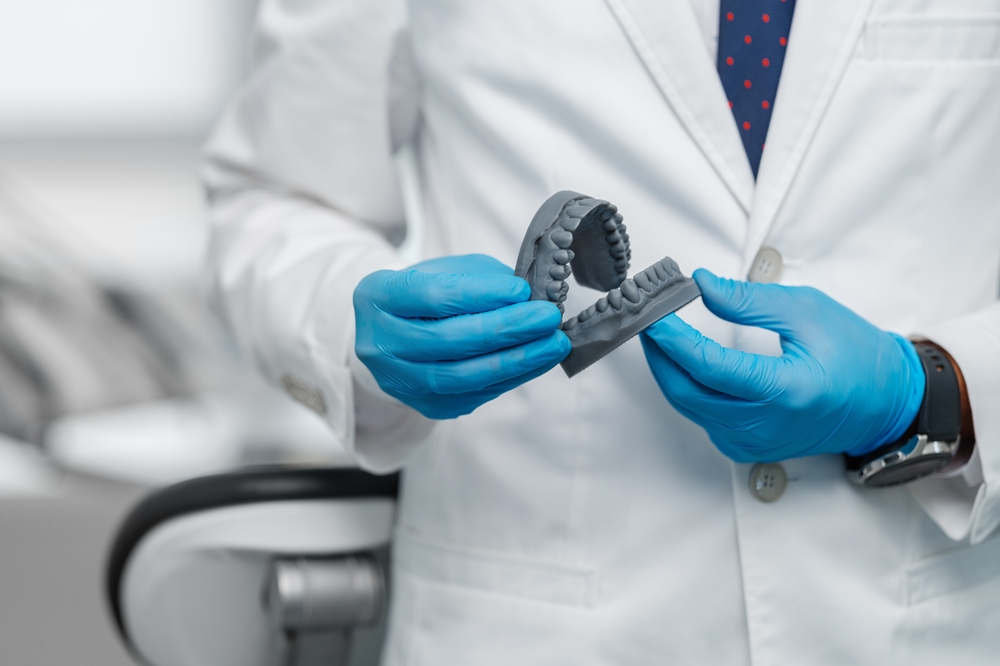
- Dental Models: Used for treatment planning and case visualization
- Surgical Guides: Help improve accuracy during dental implant placement
- Orthodontic Appliances: Assist in planning and producing clear aligner systems
- Temporary Restorations: Provide functional solutions while permanent restorations are being completed
This technology allows the dental team to work with greater accuracy and efficiency across multiple types of treatment.
Key 3D Dental Printing Benefits for Patients
One of the most noticeable advantages of 3D printing in dentistry is the impact it has on the patient experience.
-
Faster Treatment Times: Because many restorations can be created in-house or with streamlined lab coordination, patients often wait less time for final results.
- Improved Precision: Digital design and printing reduce the margin for error, leading to restorations that fit more accurately.
- Greater Comfort: Digital scanning replaces traditional impression materials, making the process easier for many patients.
- Fewer Appointments: In some cases, treatments that once required multiple visits can be completed in fewer steps.
- Better Long-Term Results: Precise fit and design contribute to improved durability and function of dental restorations.
How 3D Printing Improves Common Dental Procedures
Dental Crowns and Restorations
Crowns designed with 3D technology often fit more accurately and require fewer adjustments.
Dental Implants
Surgical guides created through 3D printing help improve implant placement accuracy and predictability.
Cosmetic Dentistry
Digital planning allows for more controlled and customized aesthetic outcomes.
Orthodontics
Clear aligner systems rely heavily on digital models and precise planning.
Emergency Dental Care
In some cases, 3D printing can speed up the creation of temporary restorations for urgent needs.
Why Technology Matters in Patient Care at Alpine Family Dental
Modern dental technology is not just about convenience—it directly impacts the quality of care. At Alpine Family Dental, digital tools like 3D printing are used to support:
- More predictable treatment planning
- Minimally invasive procedures
- Reduced chair time for patients
- Improved communication between the patient and the provider
- Consistent, high-quality results
Technology helps the dental team focus more on precision and patient comfort throughout the entire treatment process.
Is 3D Printing Safe in Dentistry?
Yes. Dental 3D printing is considered safe and is widely used in modern dental practices. The materials used are biocompatible and designed specifically for use in the mouth.
In addition:
- Materials are FDA-regulated
- Printing systems follow strict clinical standards
- Final restorations are tested for durability and fit before placement
Safety and precision are key priorities in every step of the process.
Experience Comfortable, Precise Dentistry Close to Kalispell
When dental care feels personal, it changes everything. At Alpine Family Dental, patients from Kalispell, Whitefish, Columbia Falls, and nearby communities are welcomed into a space where advanced technology and compassionate care work together for better outcomes.
Whether you’re exploring treatment for the first time or ready to move forward with restoring your smile, you deserve care that feels clear, comfortable, and tailored to your needs. Call our dentist in Kalispell at (406) 752-1107 to take the next step toward a healthier, more confident smile—right here in your community.